


No products in the cart.
Uncategorized
It Came Back After Six Years
08
Jun
Jun

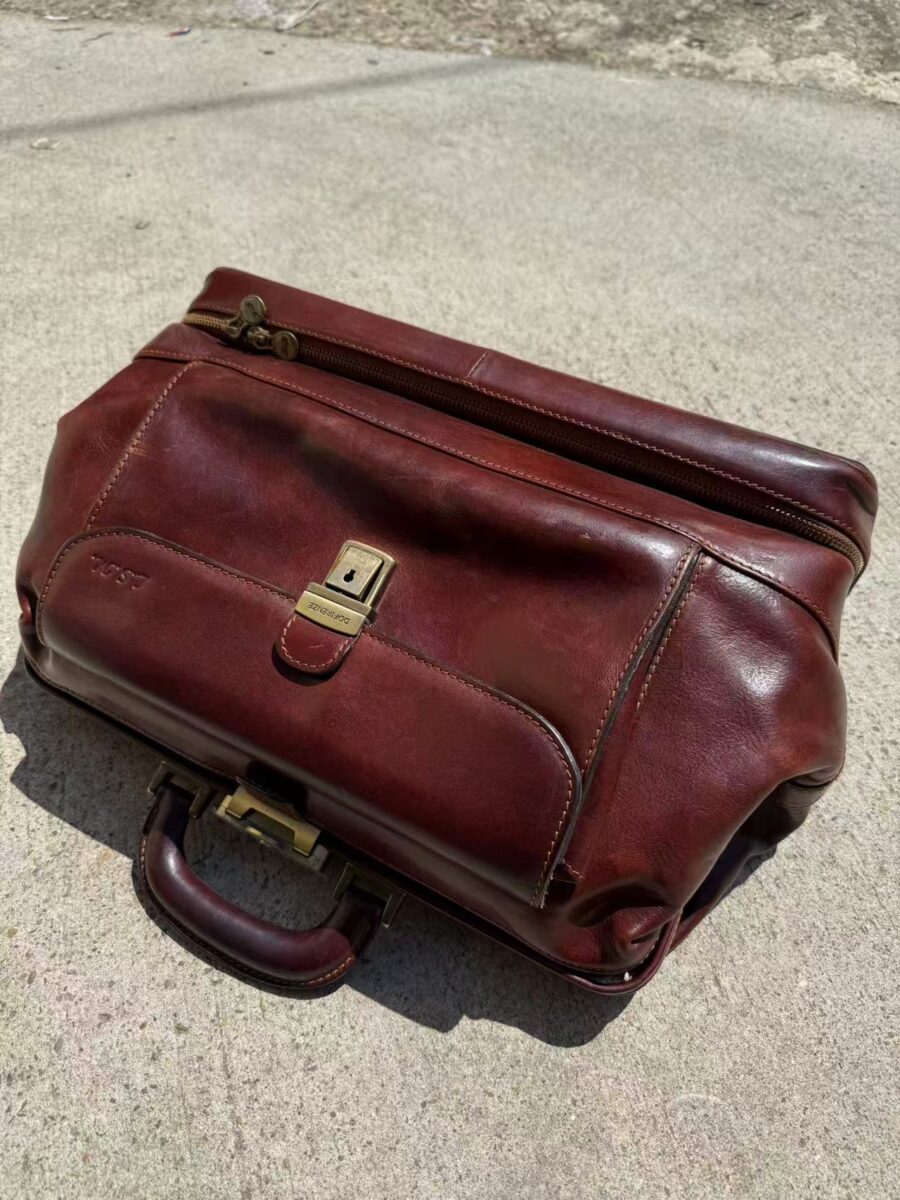
A bag we made years ago came back to us last month — and last week it sat on the bench, finished, ready to go home again. I want to tell you about it, because it says more about how we work than anything I could put on a product page.
It’s one of our doctor’s bags, in oxblood — that deep bordeaux red the Tuscan vegetable tanning gives you. When it first left here the colour was even and a little flat, the way this leather always is before a pair of hands has lived with it. Then it went off to do its job, and we didn’t see it for six years.
When the email came, I braced for the word every maker dreads — broke. That’s not what its owner wrote. He wrote that he still used it every day; it just needed a bit of looking after. Two very different sentences. Only one of them is the reason we still do this by hand.
So he sent it back, in its original box — the box itself gone soft at the corners by now — and I lifted it out and just held it a moment.
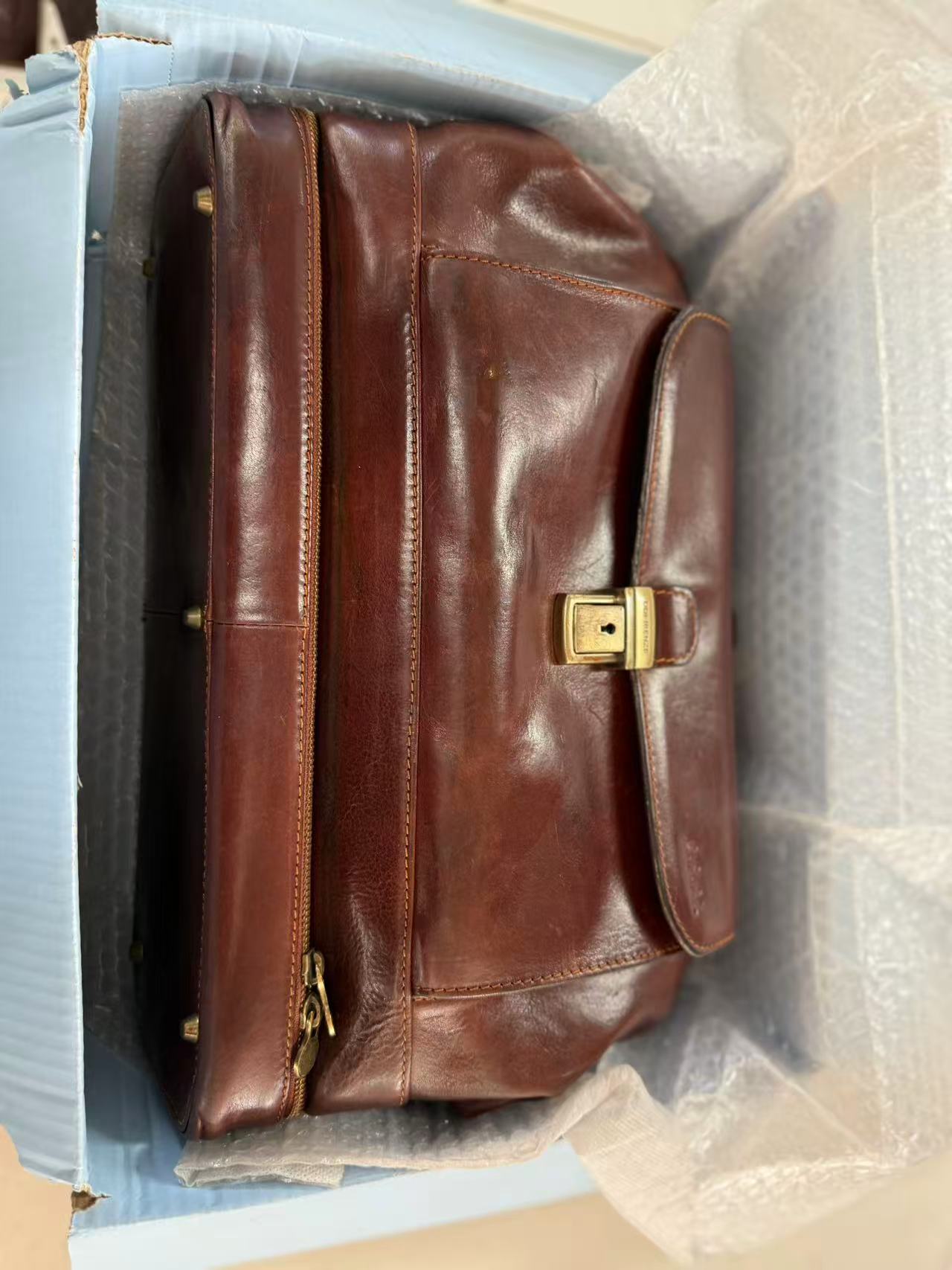
The first thing was the colour. Six years had done what no finish out of a spray gun can fake: the red had deepened and caught fire where his hand always went — the top of the handle, the front edge — glowing almost crimson where the leather had been polished by nothing but use, darker and quieter in the folds. Every shade of it was earned.
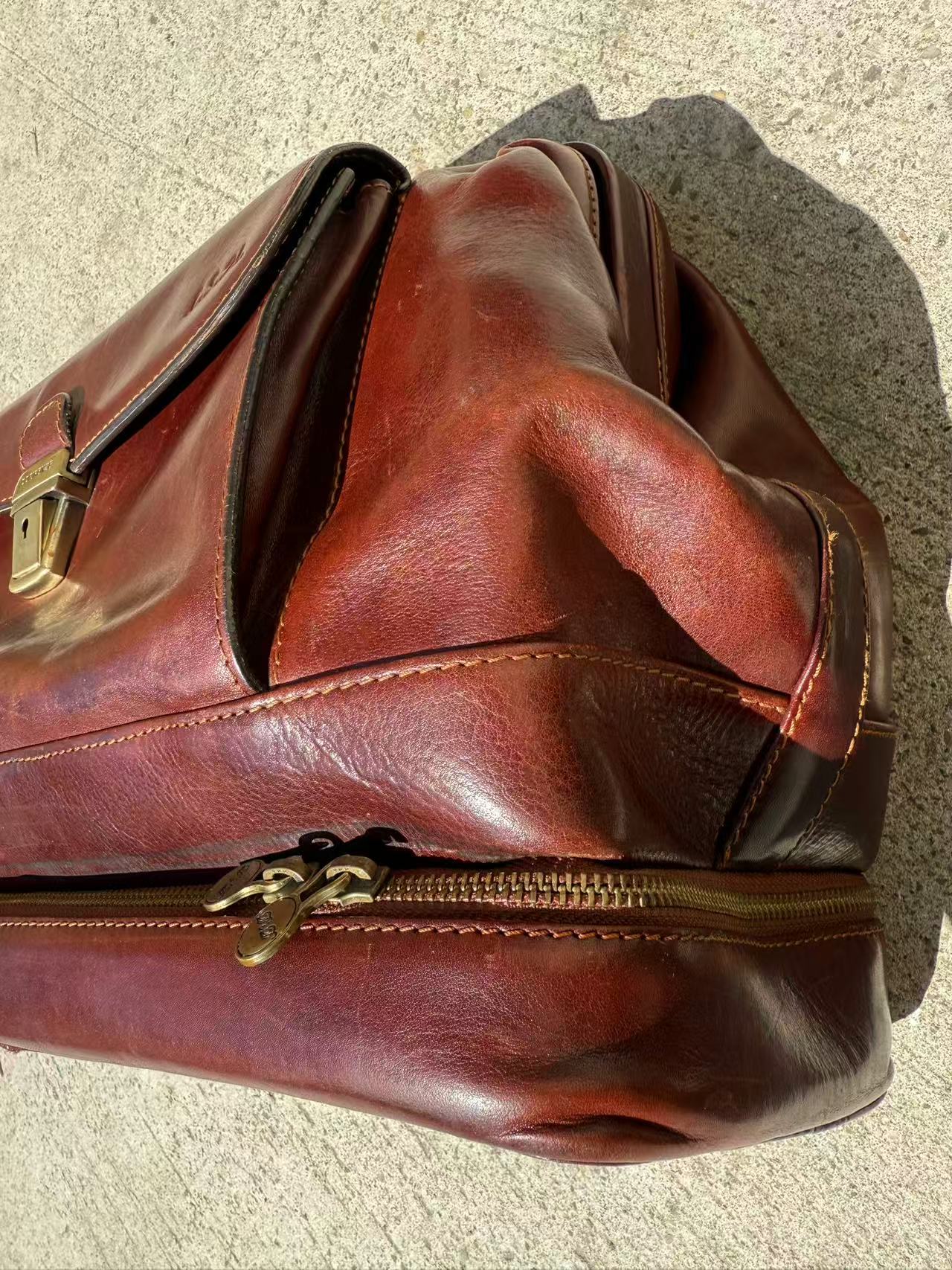
The second thing was his initials. L.S.M., pressed into the front flap the day it was made — we stamp them by hand, free, on every bag, and most people never think about it again. But there they were, six years on, still holding. A small private signature riding around on the front of a bag that had clearly been somewhere. I’ll admit that one got me.
The brass lock still wore its mark too — D&D Firenze — rubbed smooth and gone the warm gold only old brass gets. Underneath, the long bottom zip with its two little D&D pulls still ran clean end to end. This is a working bag: a deep main frame for the day’s load, a zipped compartment below for everything else. Six years of being opened, packed, carried, set down, opened again.
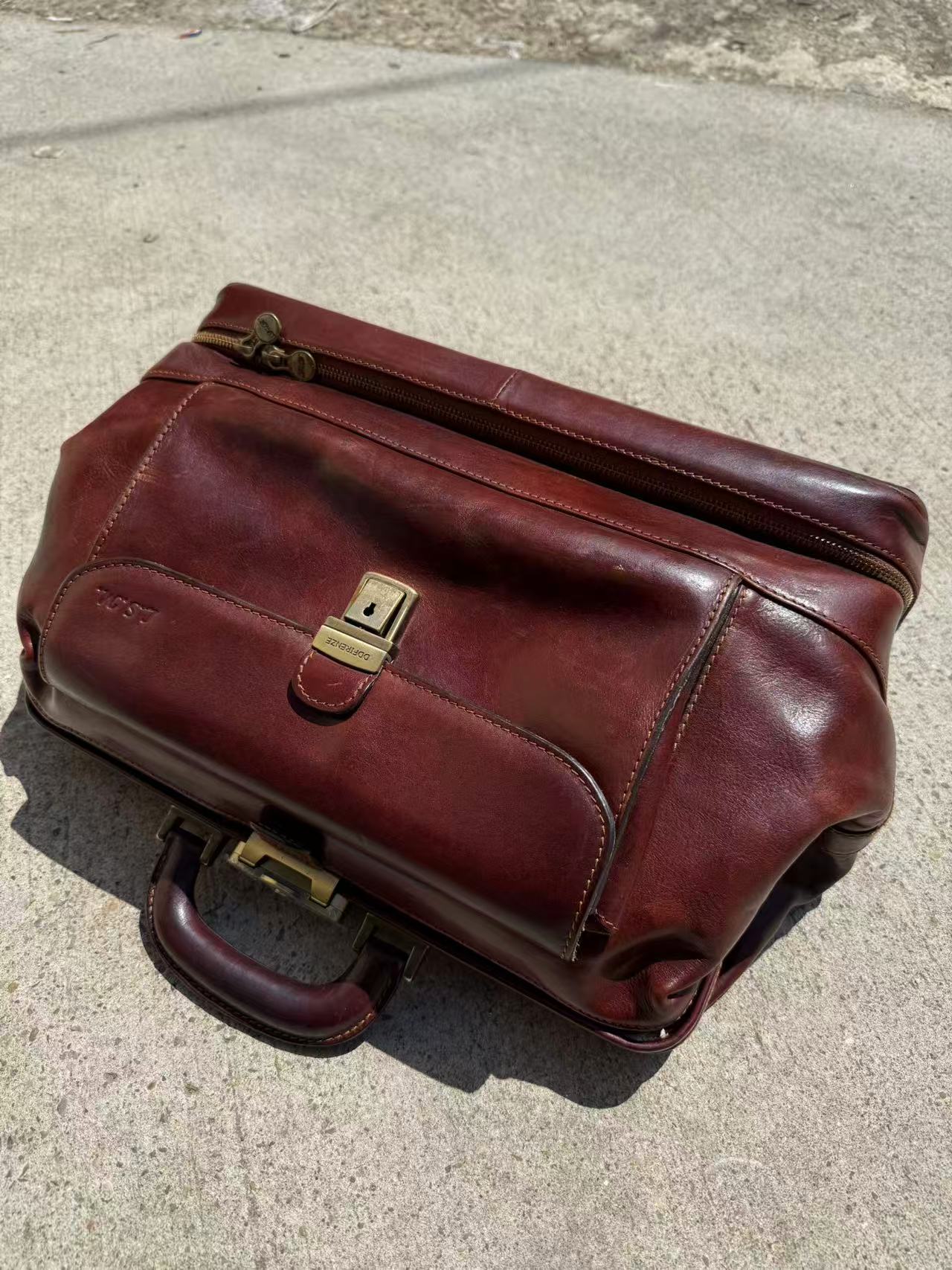
What did it actually need? Less than you’d think. The body was sound, the frame true, the stitching mostly honest. We went over the parts that work hardest — the clasp that’s been thumbed open a thousand times, a tired run of stitching, the handle that takes the whole weight every time it’s lifted — and then we fed the leather until it drank and stopped. We did not sand the patina back or recolour it. That would have meant erasing six years of his life, and that isn’t ours to erase. We made it whole, and let it keep its story.
Then we boxed it up to go home — and that’s what you’re looking at in these photos. Not a new bag. A kept one.
People ask why we don’t just build them to give out sooner. We’d sell more, sure. But I don’t want to sell the same man his fourth bag. I’d rather make one that’s still on his arm in twenty years, gone dark and soft and full of his days, his initials still on the front. A bag you can repair is a bag you got to keep. A bag you have to replace was never really yours.
Six years of daily use, and this one’s going back to work. That’s not a slogan. It’s just what happened — and it’s the only proof of our work I’ve ever trusted.
— from the workshop, Tuscany
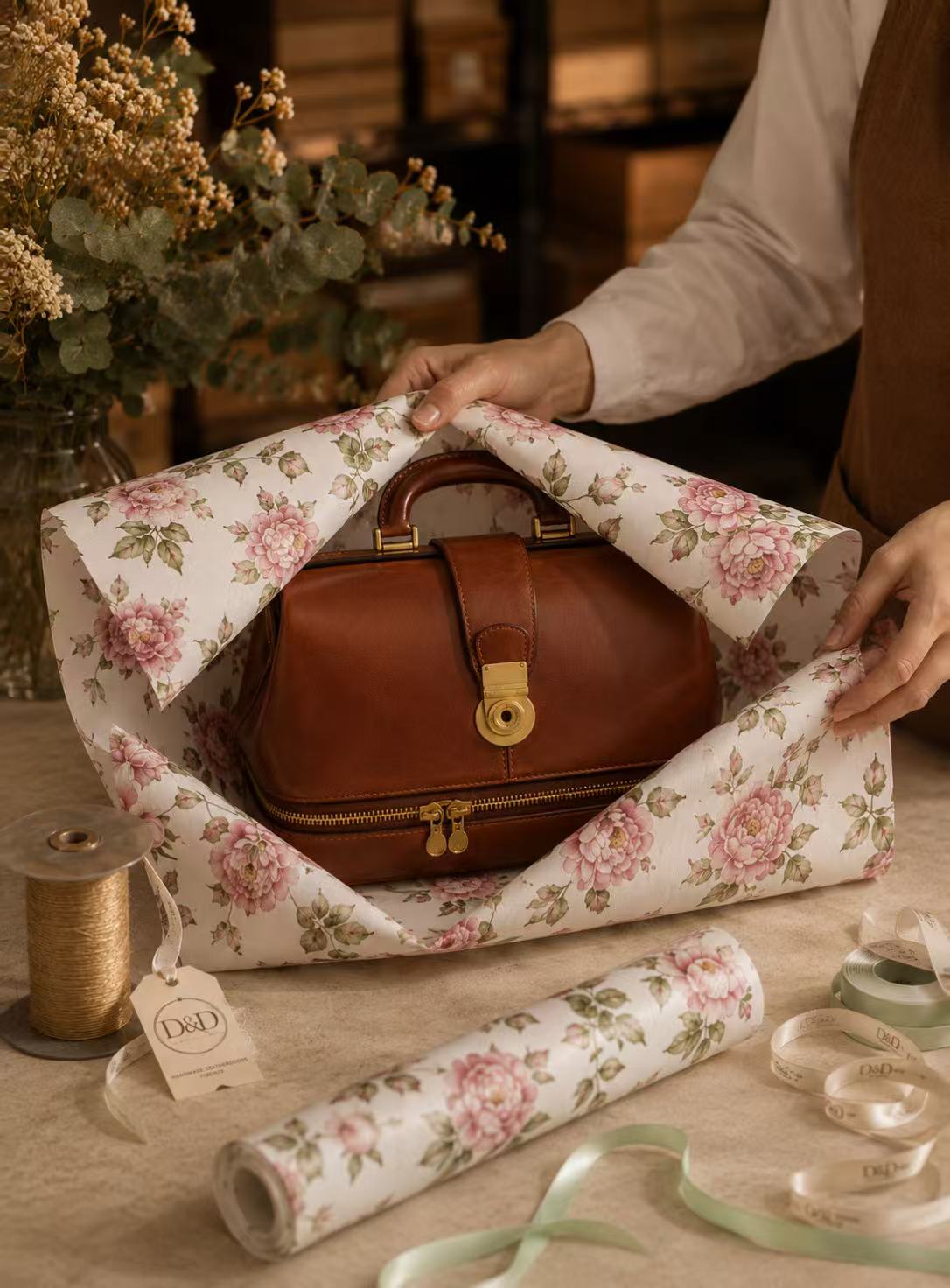
Every one of our handmade leather doctor bags is built for exactly this: to be used, lived with, and — when it’s needed — repaired. If you’re choosing one, take a look at the Classic Doctor Bag: we’ll stamp your initials into it, included in the price.